

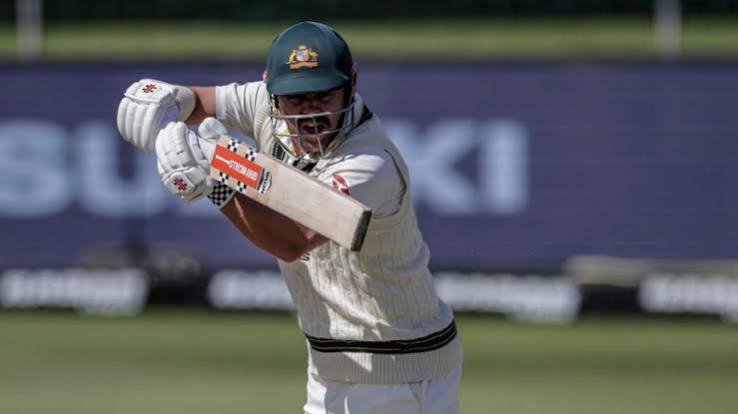
Travis Head scored 121 in the second innings against Gqeberha, while Cameron Green scored a resolute hundred against Bangladesh, despite these defeats. Nevertheless, these initiatives were not a component of a broader team recovery. In Darwin, Steven Smith was the sole player to reach fifty in the opening innings of those games, which Australia, in essence, lost. The dissatisfaction was succinctly expressed in Head’s brief evaluation of Australia’s 99 all out in the first innings at St George’s Park.
Australia’s recently played Test matches against Bangladesh and South Africa have been difficult for the team’s batting lineup. These two series have been characterized by a structural issue at the crease, as only one player has tallied fifty runs in seven innings more than once. Immediately following Australia’s defeat, Bangladesh emerged victorious in Darwin by nine wickets, while South Africa secured a victory at St George’s Park in Gqeberha by an innings and thirty-one runs.
What is the reason for the failure of Australia’s alliances?
Pat Cummins acknowledged at the press conference that victories may obscure more profound issues. Australia’s most recent victories—a thrilling two-day match at Mackay and an exceptional performance at Durban—were primarily dependent on individual batting rather than teamwork. Mitchell Starc’s incisive bowling contributed to Australia’s victory at Mackay, as they amassed a first-innings total of 210. However, the batting collapsed to 146 for 7, with only Cameron Green reaching fifty in the second innings.
Matt Renshaw’s match total of 272 runs at Kingsmead in Durban was substantially higher than that of his teammates, once again emphasizing the necessity of lone performers.
The series’ recurring motif was taken into account by Travis Head.
What is the influence of momentum on Australia’s strategy?
Forming robust partnerships has consistently been Australia’s forte in Test cricket; however, this foundation has crumbled in recent months. Travis Head articulated the team’s awareness of this decline and the challenge of rectifying it.
The broader context reveals a more profound issue. Since the commencement of 2024, when the batting order was altered in response to David Warner’s retirement, Australia has recorded only 11 century stands for batsmen one through six. Among the nations that participate in the World Test Championship, only the West Indies have a lower number of these alliances. After Australia’s lowest first-innings score since South Africa crushed them for 85 at Hobart in 2016—99 all out at Gqeberha—coach Andrew McDonald lamented the batting order’s inability to withstand pressure for an extended period of time in order to halt the tide.
Also Read : Will Jacks Says England Face a Mini World Cup After Shock Defeat to Sri Lanka
Australia’s defense and attack strategies are determined by momentum in challenging situations. Travis Head elucidated the necessity of maintaining a delicate equilibrium as pressure increases.
What type of strain is Labuschagne experiencing?
Travis Head acknowledged the pressure Labuschagne was under after Marnus Labuschagne was dismissed in the second innings at Gqeberha by lofting Simon Harmer to mid-on, thereby terminating their 92-run partnership. After his lbw verdict was reversed on DRS due to the ball missing leg stump by less than 5mm, Labuschagne was dismissed after only 13 balls. This moment clearly impacted him.

Sonam Singh is a passionate cricket writer and sports content creator who brings the latest cricket news, match updates, player stories, and important developments from the world of cricket. Her writing focuses on making cricket information simple, engaging, and easy to follow for fans.


Discussion about this post